How to use this calculator
- 1. Enter measurementsChoose the area shape and enter its dimensions.
- 2. Enter depthUse the finished depth specified for your project.
- 3. Review the estimateConfirm the quantity and order details with your supplier.
Enter your area and compacted depth. Get tons of crusher run to order and the loose yards that arrive on the truck.
After compaction, not before.
Includes 5% extra.
Finished depth: 4 in. Finished density: 138 lb/ft³. Loose delivery density: 100 lb/ft³.
200 sq ft × 4 in = 2.469 yd³ before extra.
With 5% extra: 2.593 yd³ in the finished state.
At 138 lb/ft³: 4.83 US tons.
Same mass ÷ loose density (100 lb/ft³) = 3.578 yd³ for delivery.
Quantity estimate only. Confirm density, product suitability, order size, and delivery fees with your supplier.
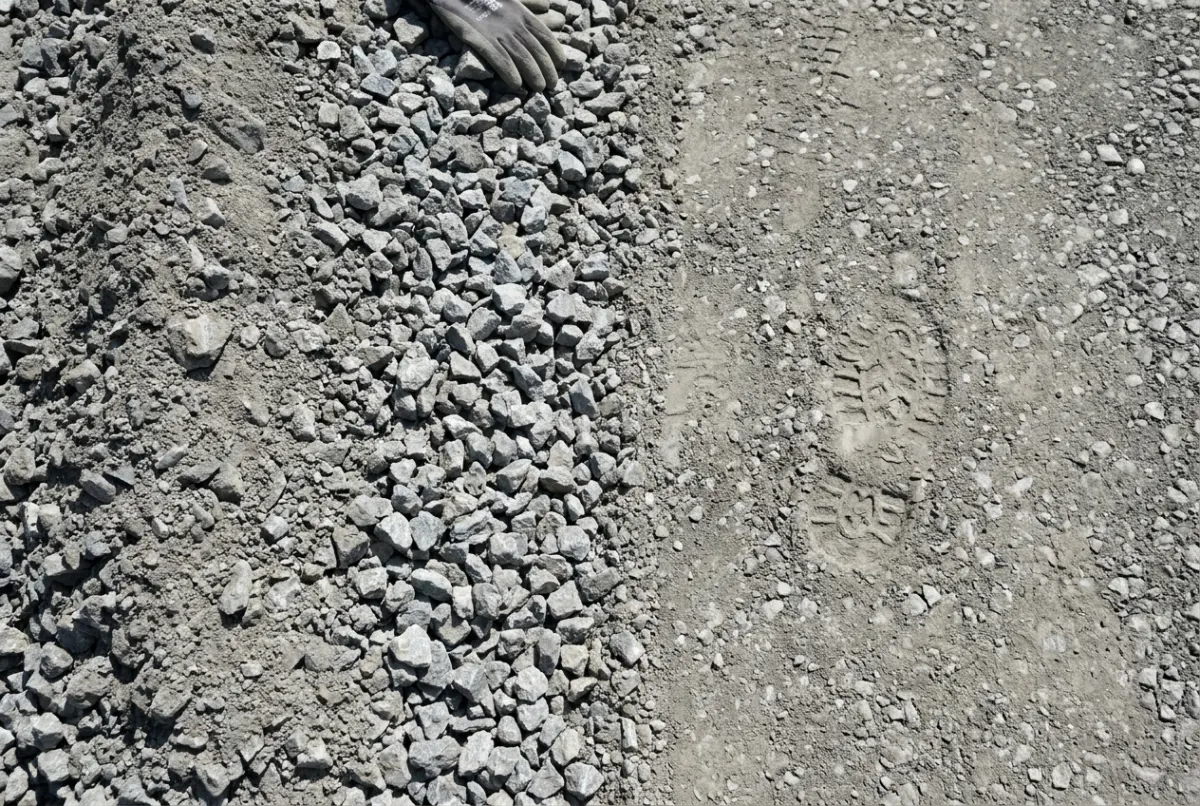
Crusher run arrives fluffy and shrinks by roughly 25–30% when you compact it. Many calculators multiply your compacted volume by a loose weight (about 1.4 tons per yard) and add 10–15%. That comes up short.
Loose: FEMA appeal 1930-DR-IA. Compacted: WisDOT 0092-22-05, Ohio DOT Item 411, Vulcan Materials.
Same idea everywhere: crushed stone from about 1–1½ inches down to dust. The exact gradation is set by each state, so ask for the spec sheet.
| Name | Where you'll hear it |
|---|---|
| Crusher run, crush and run | Most of the US |
| CR-6 | Maryland, Virginia, Mid-Atlantic |
| 21A / 21B | Virginia |
| DGA (dense grade aggregate) | Kentucky, Pennsylvania, New Jersey |
| QP (quarry process), Item 4 | New Jersey, New York, New England |
| ABC, GAB (graded aggregate base) | North Carolina, South Carolina, Georgia |
| CA-6 | Illinois |
| Class 5 | Minnesota |
| 304, 411 | Ohio |
| 2A | Pennsylvania |
| Road base, ¾-inch minus | The West |
| Project | Compacted depth | Source |
|---|---|---|
| Paver patio or walkway base | 4 in minimum | CMHA (formerly ICPI) |
| Paver driveway base | 6 in minimum | CMHA |
| Gravel driveway base | 4–6 in (6–8 in for trucks) | Industry practice |
| Shed pad | 4 in or more, 12 in past the walls | LP Building Solutions |
| Each compaction lift | 6 in or less | Ohio DOT Item 411 |
Poor soil, standing water, or heavy loads all call for more depth. Your plans or local code take priority.
| Crusher run | #57 stone | |
|---|---|---|
| What's in it | Stone plus its own dust | Clean 1 in to 3/16 in stone, no dust |
| Packs hard? | Yes, almost like pavement | No, it stays loose |
| Drains water? | Poorly | Very well |
| Best for | Driveway top, paver base, shed pads, filling ruts | French drains, under slabs, driveway middle layer |
| Tons per yd³ | ≈ 1.86 compacted | ≈ 1.35 |
The two work best together: #57 in the middle for drainage and strength, crusher run on top to lock it in. See the gravel driveway guide for layer depths.
HomeGuide's 2026 national range is $24–$34 per ton delivered, or about $51–$54 per cubic yard. Quarry pickup is cheaper: one South Carolina county quarry lists crusher run at $15.50–$20.50 a ton (August 2026). Delivery typically adds $10–$25 per ton. Type your quote under "Price & delivery" in the calculator to get a total.